
RIVEROS CORP NETWORK | Apostille de la Haya · Notary Public Center · Compliance Officers · USJurisdiction
+1 (305) 647-3000 · WhatsApp · Español|English
Home » FOIA Requests » FOIA Appeals
We review the agency’s response, work out how much time you have left, and prepare and file your administrative FOIA appeal. Miami office, English and Spanish, everything handled remotely if you prefer.

It is the challenge you file with the same agency when its response to your FOIA request is adverse. The statute guarantees at least 90 days from that response to appeal, and each agency sets its own period within that minimum. The agency then has 20 working days to decide the appeal.

At the Justice Department, which includes the FBI and the immigration courts, adverse determinations include:
At Homeland Security (USCIS, CBP and ICE), you can also appeal if you question the adequacy of the search, if the agency misread the request or answered only part of it, or if there is a procedural problem such as miscalculated fees.
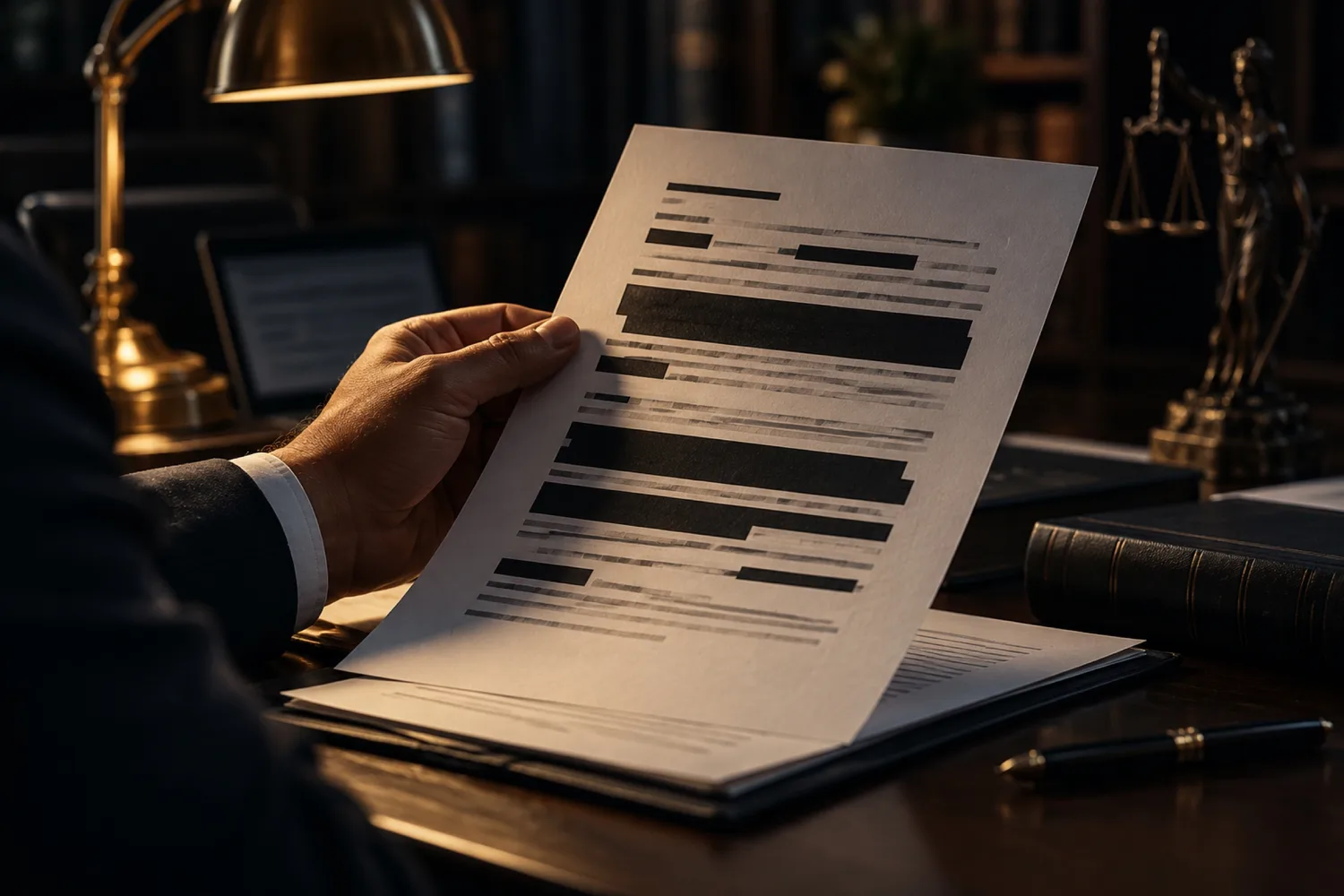
And no clear reason why.

When you know records exist.

With little explanation.

Each agency counts its appeal period differently.

Time passes and the agency does not answer.
What we do: We check which exemption the agency cited for each part and whether it showed how much was deleted.
What we do: We compare the search with what was asked for and, if it falls short, raise it in the appeal.
What we do: We appeal that decision, which is an adverse determination too.
What we do: We calculate that agency's period from the date of the response.
What we do: We contact the FOIA Public Liaison and, if you decide to, OGIS mediation, without letting the appeal deadline run out.
With its date and the request number.
That agency's period, counted from the date of the response.
Every exemption cited and every redaction.
It identifies the decision being appealed and explains why it is wrong.
At the Justice Department, with its Office of Information Policy, including through its web portal.
And tell you what the agency decided.
If the request goes to litigation, the Justice Department ordinarily stops deciding the appeal.
| Agency | Time to appeal | Where |
|---|---|---|
| Statutory minimum | At least 90 days from the response | Each agency sets its own |
| Justice Department (FBI, immigration courts) | 90 calendar days from the response | Office of Information Policy |
| Homeland Security (USCIS, CBP, ICE) | 90 working days from the response | The component’s Appeals Officer |
One difference that matters: the Justice Department counts calendar days; Homeland Security counts working days. For any other agency, we check its regulation before filing.
Once the appeal is received, the agency has 20 working days to decide it, extendable in unusual circumstances. We cannot promise when it will decide.
The statute frames mediation as an alternative to litigation, not to the appeal. So while it runs, we keep tracking the appeal deadline.
At the Justice Department, the appeal decision comes in writing. If it upholds the denial, it gives the reasons and tells you about your right to sue and about OGIS mediation. At Homeland Security, an adverse decision by the Appeals Officer is the department’s final action.
The next step is a federal district court, which can order the release of records improperly withheld; there, the agency carries the burden of justifying the withholding. Before suing, you generally must have filed a timely administrative appeal. A lawsuit is a matter for a licensed attorney.
Since the 2016 amendments, an agency may withhold information only if it reasonably foresees that release would harm an interest protected by an exemption, or if the law prohibits release. It must also release any reasonably segregable part of the record. Both are points we check in every redacted response.
175 SW 7th ST, Suite 1905. Come in, or do everything remotely.
For requesters who prefer to hear in Spanish what the agency decided.
We count from the day the response arrives, using each agency's rule.
USCIS, CBP, ICE, the immigration courts, the FBI and the business regulators.
Riveros Corp was founded by Zulma E. Bourelly, a Florida Notary Public, County Court Mediator and ACAMS-certified CAMS.
If a representative filed the original request, it had to name the client; if it did not, courts have held that the client may not be able to sue over it later. We check this before appealing.
At least 90 days from the response. At the Justice Department it is 90 calendar days; at Homeland Security, 90 working days.
The statute gives it 20 working days, extendable in unusual circumstances. We cannot promise when it will decide.
An office of the National Archives that mediates between requesters and agencies, on a voluntary and neutral basis.
No. The statute frames it as an alternative to litigation, not to the appeal, so we don’t let the appeal deadline lapse while it runs.
The rule that an agency may withhold information only if it reasonably foresees harm to an interest an exemption protects, or if the law prohibits release.
Yes. Records that do not exist or cannot be located is an adverse determination, and at Homeland Security you can appeal an inadequate search.
Yes. At the Justice Department, denying expedited processing is an adverse determination.
Yes. Denials involving fees or fee waivers are adverse determinations, and at Homeland Security you can also appeal fees you believe were miscalculated.
It helps: the appeal should identify the decision being appealed and the request number. At Homeland Security, include it if you know it.
At the Justice Department, the decision gives the reasons and tells you about your right to sue and about OGIS mediation. A lawsuit is a matter for a licensed attorney.
Yes. We prepare it and file it in your name, the way the agency takes appeals.
Message us on WhatsApp, call +1 305 647 3000 or visit our Miami office. Send us the agency’s response and we’ll tell you how much time you have left.
Email: [email protected] · 175 SW 7th ST, Suite 1905, Miami FL 33130
how FOIA works and which agency holds which record.
your immigration file (A-file).
border entry, exit and inspection records.
court, detention and removal records.
FBI files that mention a person.
federal contract, inspection and enforcement records.